
If you believe your employer owes you overtime, the single best move right now is to call the Wage and Hour Division at 1-866-487-9243 or file online; to understand more about your working hours limits, see hoeveel uren mag je als flexi werken? It costs nothing, and WHD keeps your initial contact confidential. While you decide how to proceed, start collecting evidence today.
- Pay stubs from the last several months
- A personal log of hours worked (dates, start and end times, breaks)
- Copies of your schedule and any texts or emails about hours
Key Takeaways
Recovering unpaid overtime almost always starts with documentation, moves through a free WHD complaint, and stays open to a private legal claim when the numbers or the retaliation risk justify it.
| Point | Details |
|---|---|
| Act within your window | File within two years for non-willful violations or three years for willful ones to protect your claim. |
| Document everything | Keep your own time log alongside pay stubs and schedules in case company records disappear. |
| Know the math | Regular rate = weekly earnings ÷ hours worked; overtime premium = 0.5 × regular rate × overtime hours. |
| Filing is free | WHD investigations cost nothing and keep your identity confidential during initial intake. |
| Use Workplace Fairness resources | Workplace Fairness offers free overtime guides, demand letter templates, and an attorney directory for complex cases. |
Where to Find Official Forms and Contacts
- DOL Wage and Hour Division overtime page for eligibility rules
- Contact WHD to file online or find your local number
- Workers Owed Wages (WOW) to search for recovered back pay and access the WH-60 claim form
- WHD phone line: 1-866-487-9243, Monday through Friday
This article is general information, not a substitute for advice from a qualified lawyer. Consult a qualified legal professional about your own circumstances before acting on anything here.
Table of Contents
- What Is the Overtime Pay Claim Process and Who Qualifies?
- What Evidence Do You Need to Collect First?
- How Do You Calculate the Overtime You’re Owed?
- How Do You File an Overtime Wage Dispute?
- How Far Back Can You Claim Unpaid Overtime?
- When Should You Bring In an Attorney?
- How Workplace Fairness Helps You Move Forward
- Sources
What Is the Overtime Pay Claim Process and Who Qualifies?
Most hourly workers are entitled to overtime under federal law. If you’re a nonexempt employee, your employer must pay you 1.5 times your regular rate for every hour over 40 in a single workweek, and that workweek is a fixed 168-hour period that can’t be averaged with a slow week the next month.
Exemption status hinges on your actual job duties and salary, not your title. A “manager” who spends most of the day stocking shelves or answering phones may still qualify for overtime, regardless of what the offer letter says. Watch for another common trap: employers who claim that unapproved overtime doesn’t count. It’s not true. If your employer knew or should have known you worked extra hours, the obligation to pay stands even without prior sign off.
Pro Tip: If your paycheck lists you as “salaried” but you spend most of your time on manual, clerical, or routine tasks, don’t assume that title settles the question. Salary alone doesn’t create an exemption.
What Evidence Do You Need to Collect First?
Strong documentation turns a “he said, she said” dispute into a straightforward calculation. Prioritize:
- Pay stubs and W-2s covering the disputed period
- Timecards, badge swipes, or punch-clock printouts
- Written schedules, shift swap records, and manager emails or texts referencing hours
- Payroll or handbook policies on overtime, tips, and bonuses
- Sample weeks with your own math showing hours versus pay
If your employer’s records are incomplete or you fear they’ll disappear, start your own contemporaneous time log today, noting dates, hours, and tasks in a notebook or phone app. This kind of independent record has repeatedly helped workers when company timekeeping systems conveniently went missing.
Organize everything into a single folder, chronological by pay period, with scanned PDFs and a short list of coworkers who witnessed your hours.

Pro Tip: Email yourself a weekly summary of your hours. The timestamp creates a paper trail that’s hard for an employer to dispute later.
How Do You Calculate the Overtime You’re Owed?
Your regular rate isn’t just your hourly wage. It usually includes non-discretionary bonuses and shift differentials, divided across all hours worked that week, per WHD guidance. The formula is straightforward once you have the numbers:
- Regular rate = total weekly earnings ÷ total hours worked
- Overtime premium = 0.5 × regular rate × overtime hours (since you’re already being paid the base rate)
- Total overtime pay = 1.5 × regular rate × each hour over 40
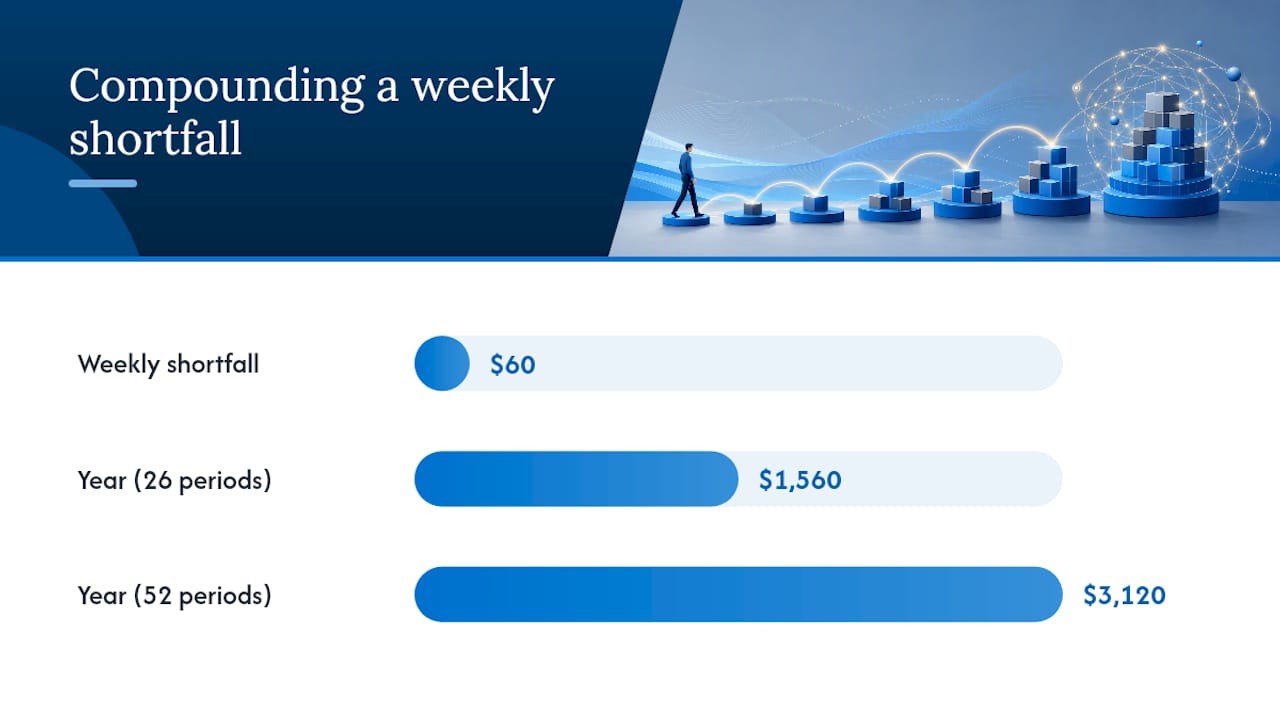
Say you earned $600 for 50 hours in a week, with no bonus. Your regular rate is $12/hour ($600 ÷ 50). You’re owed an extra $6 per overtime hour (half the regular rate) for the 10 hours over 40, or $60 in unpaid overtime for that week alone.
A single miscalculated regular rate can compound across months of unpaid work. Multiply one week’s shortfall by 26 or 52 pay periods and a $60 gap turns into real money.
How Do You File an Overtime Wage Dispute?
You have three practical paths, and they aren’t mutually exclusive.
- File with the DOL Wage and Hour Division. Call 1-866-487-9243 or file online. An intake specialist takes your information confidentially, and WHD routes your case to the nearest field office. Expect a response within 7 to 10 business days. If the agency opens an investigation, it may recover back wages, and as of October 1, 2025, payments are issued electronically.
- File with your state labor agency. Many states offer higher minimum wages, broader overtime coverage, or longer filing windows than federal law. If your state’s rules are more generous, filing there alongside or instead of WHD can secure extra remedies. Check your state labor department for its own complaint intake process.
- Send a demand letter or start a private lawsuit. If your claim involves a large sum, willful misconduct, or you want faster leverage, a demand letter from an attorney often opens settlement talks without ever reaching a courtroom. Private lawsuits can also proceed alongside or after an agency filing, and many disputes resolve through negotiated settlements once the employer sees the evidence laid out.
Whichever route you pick first, keep documenting. Agencies move at their own pace, and having a clean, dated record protects you no matter which door you walked through.
How Far Back Can You Claim Unpaid Overtime?
Timing matters. The FLSA gives you two years to file for non-willful violations and three years for willful ones, meaning deliberate or reckless violations open a longer recovery window. Filing an internal HR complaint doesn’t pause this clock. Only a WHD filing or a lawsuit stops the countdown, so don’t wait on an internal review to protect your rights.
WHD investigations cost employees nothing. If a violation is confirmed, remedies can include back wages, liquidated damages, and civil money penalties in more serious cases.
- Back wages: the unpaid overtime itself
- Liquidated damages: often an equal amount to the back wages, when the violation isn’t found to be a good-faith mistake
- Anti-retaliation protection: it’s illegal for your employer to fire, demote, or punish you for filing a complaint or cooperating with an investigation
Private lawsuits carry different costs. Many employment attorneys work on contingency, meaning you pay nothing unless they win, but ask directly about fee structure before signing anything.
When Should You Bring In an Attorney?
Not every claim needs a lawyer, but some situations call for one clearly.
- The unpaid amount is large or spans many months
- Your employer appears to have willfully hidden hours or falsified records
- You’ve faced retaliation, a demotion, or termination after raising the issue
- Multiple coworkers have the same complaint, which could support a group or class claim
- Your employer is financially unstable or has a history of ignoring wage complaints
Attorneys typically work on contingency (a percentage of what you recover), hourly, or a hybrid arrangement, and most offer a free initial case evaluation. What a lawyer can do that a WHD complaint often can’t: pursue group claims for multiple affected coworkers, run aggressive discovery to expose falsified time records, and in some cases move faster toward a settlement when an employer wants to avoid litigation.
Free Templates and Where to Start Today
Workplace Fairness offers a free unpaid overtime guide with sample calculations and a template demand letter, at no cost.
- Start your private time log tonight
- Call WHD or file your complaint online
- Pull a demand letter template if you’re considering the private route
- Remember: WHD keeps your identity confidential during initial intake
A Note From Workplace Fairness
I’m Max, and Workplace Fairness has stood behind employees since 1994, when we launched as the National Employee Rights Institute. Our mission has always centered on connecting workers with the legal knowledge they need to stand up for fair pay. We recommend starting with WHD because it’s free and confidential, but nothing stops you from lining up legal help at the same time if your situation calls for it.
How Workplace Fairness Helps You Move Forward
Workplace Fairness gives you a faster, less intimidating starting point than facing this alone. Instead of guessing at legal jargon or wading through a state agency’s website, you get plain-language guides built specifically to walk you through documentation, deadlines, and your rights, at no cost to you.
Our unpaid overtime guide breaks down sample calculations and includes a downloadable demand letter template you can adapt to your own situation. If your questions go beyond overtime, our employee rights guide covers the broader legal protections that often intersect with wage disputes, from retaliation to misclassification. And if your case is complex enough that you’re weighing legal representation, our attorney directory connects you with employment lawyers who handle wage claims regularly.
Start by reading through the overtime guide tonight, log tomorrow’s hours, and reach out through our employee rights resource if you need direction on what comes next.